

Avoid downtime with Electrical Maintenance
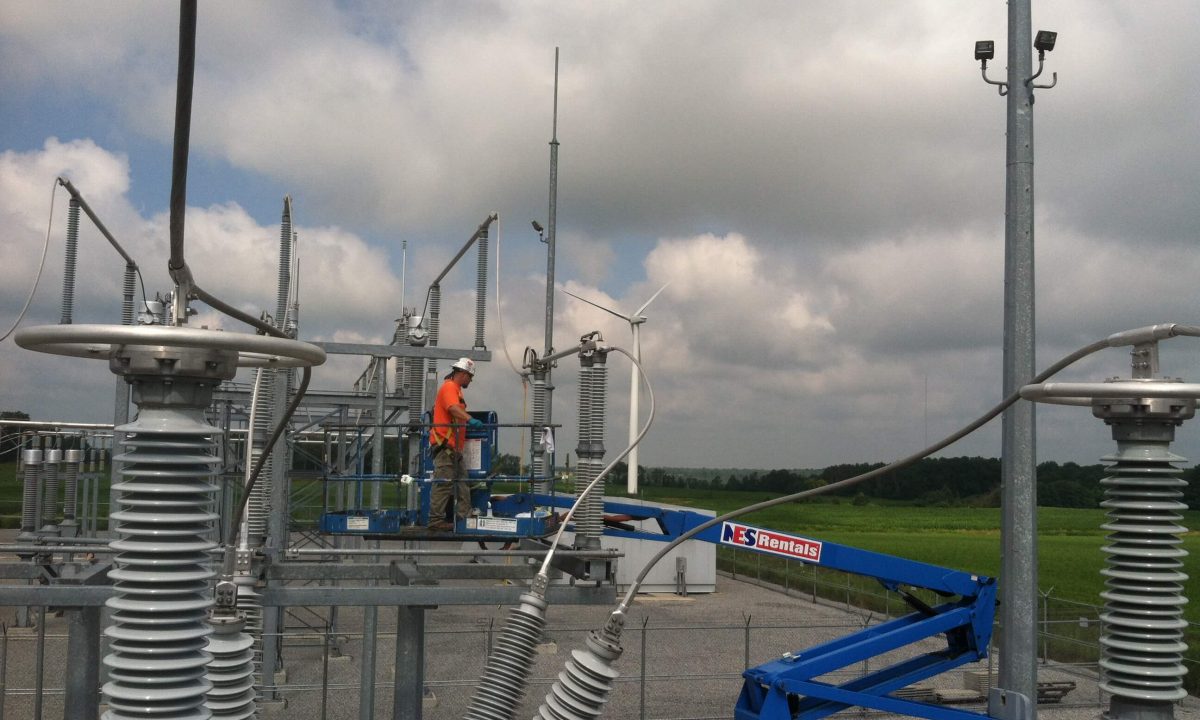
Chances are, the cost of losing power at your facility is significant, no matter if it’s one week, one shift or one hour.
If you’re in charge of electrical maintenance at your facility or organization, downtime is not an option. As a result, electrical maintenance plays an essential part in avoiding costly shutdowns. Working in organizations such as hospitals, manufacturing, and automotive plants, water and wastewater plants, universities and colleges, commercial buildings, data centers, airports, and power generating facilities such as carbon-based, wind, solar, and hydro. You need a professional organization that can keep power and controls safe and reliable.
We often ask clients when they last scheduled a maintenance review of their electrical equipment and the answer can be surprising. You may have other equipment reviewed for maintenance annually, like your vehicle or a home’s furnace or A/C unit.
Team UIS doesn’t provide oil changes and you can’t schedule us to give your lawnmower a tune-up. But we can help you create and keep your electrical equipment maintenance plan optimized. As soon as new equipment is installed, a process of normal deterioration begins. If left unchecked, the deterioration process can cause malfunction or an electrical failure. Electrical equipment life can be extended dramatically by simple precautions that promote:
- Cleanliness
- Dryness
- Tightness
- Prevention of friction
These facilities have complex electrical systems with switchgear, control panels, motor control centers, and other electrical apparatus that have the potential to shut down facilities or expose people to serious workplace hazards.
Simply put, such maintenance supports safety and reliability. And it helps reduce your insurance exposure.
Safety
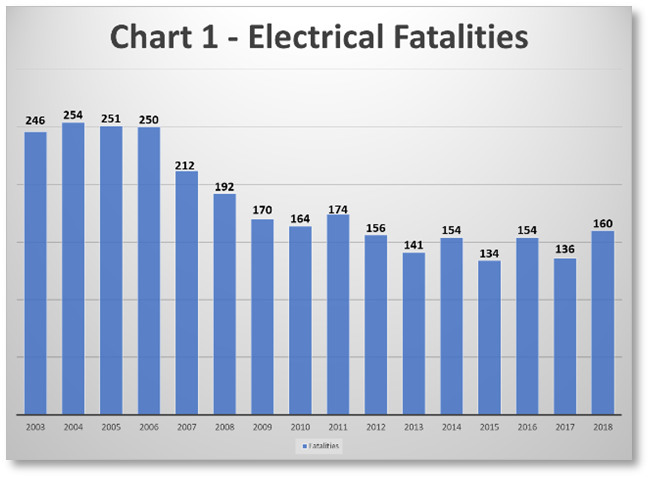
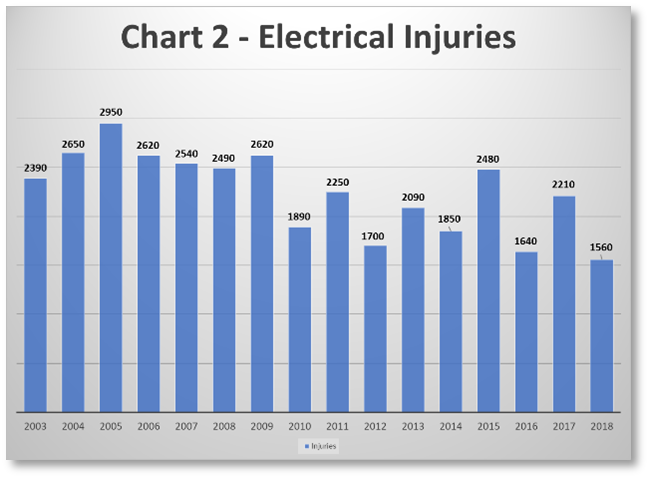
The safety hazards can be electrical shock, electrocution, burns, fire, and powerful explosions that can blow the door off a panel. The two tables below show the latest US statistics and are courtesy of the Electrical Safety Foundation International. Electrical maintenance and enhanced safety practices have had a significant impact on reducing fatalities and injuries.
Reliability
Common examples of the causes of unexpected failures are mechanical failures, water, ice, wind, accumulation of dirt, corrosion, mice, raccoons, vegetation, insects, spider webs, electrical component failure, and even forgotten tools. Some examples of real downtime are a large hotel out of power for a few days due to a failed transformer by tracking from dirt; a section of a manufacturing facility closed due to an exploded breaker, again by dirt tracking to ground; and an airport shut down from water damage and corrosion in the electrical system. There is limited data on the failure rate of common electrical system components.
What is driving up the safety and reliability of electrical systems? It is the push to implement good maintenance and operating practices defined by the NFPA-70B-2019 Recommended Practice for the Electrical Equipment Maintenance, NFPA 70E Standard for Electrical Safety in the Workplace, and the ANSI NETA MTS-2019 Standard for Maintenance Testing Specifications for electrical power equipment and systems.
Insurance
Key findings have shown, “62 percent of equipment breakdown losses were due to lack of maintenance, accounting for three-quarters of all equipment loss claims paid.” Download our 4 w’s of Electrical Maintenance white paper to read more about the importance of Electrical Maintenance.